Introduction
The average day in a consumer society has vastly changed throughout a single score. Take your average Joe for example. In 1999, he begins his day by going to get his daily coffee. After ordering his caramel macchiato and everything bagel toasted, he waits 10 minutes in the drive-through line. Upon arriving to the window, he pays in cash and leaves the remaining change in his center console full of miscellaneous objects that haven’t seen the light of day in years. Fast forward to 2019, Joe’s day begins with the same caramel macchiato and everything bagel toasted. However, this time he orders prior to leaving his house on his iPhone. Upon reaching his local coffee shop, his coffee and bagel are on the ready-to-go counter.
Consumption of goods is becoming seamless. Within 20 years, consumption of commodities has completely transformed. Music lovers have gone from buying albums in stores to instantly downloading albums on Spotify seconds after the release. Sneakerheads have transitioned from waiting days in line for sneakers, to buying the latest trends in one-click on the Nike SNKRS app. Apple pay allows Joe to pay for his groceries without carrying his wallet full of cards, cash, and change. Venmo, a PayPal company, lets Joe buy cannabis from his local dealer or order uber eats from the finest restaurants in the district.
This transition stems from the ease of online payments. PayPal, fabricated during the .com bubble, and has ever since excelled in simplifying sending money online. They became the payment rail for Ebay, a website that empowered people to sell items they no longer needed. This was a massive transformation ideologically for humans. It proved an alternate economy could exist on the worldwide web. Today, billions of business transactions are paperless. The cost, efficiency, standardization, and speed are powering digital money. Our intrinsic appraisal of money becomes convoluted due to the velocity of transactions. Where money has been and where it is headed requires a deep dive into the origins of money.
The necessity of money begins with trading goods and services. In economies of scale, producers of goods are more profitable when they consistently produce the same goods. This is simply a function of time. Joe cannot produce the greatest quality wool in the community if he spends all his time hunting for meat. Communities were built through specialization by its members. Sprouted from this was the barter economy. A barebones economy that consists of a hunter trading for sheep, or the herder trading for meat. Although this economy seems straightforward, it remained largely inefficient when the hunter wanted to trade his meat for shoes, but the cobbler had no need for meat. The barter economy direly needed an intermediary good to facilitate trade between vendors, especially with those that produced time sensitive goods. The race to find a medium of exchange begun.
Each economic transaction has two parties engaging. Each party provides some marketable value to the other. A party is either trading for direct or indirect consumption. The party trading for indirect consumption is looking for higher marketable value for future transactions (Ludwig Von Mises, 1912). Commodities of higher ‘money-ness’ have battled over the years, and this phenomena continually progresses.
Each money that has risen, inputs additional empirical evidence to what characteristics of money homo sapiens are in constant in search for. Vijay Boyapati’s framework serves as a good schematic approach to why previous monies were left behind. ‘Money-ness’ characteristics that generate more marketable value for a commodity are determined by durability, fungibility, verifiability, divisibility, scarcity, adoption history, and censorship resistance (Boyapati, 2017). It is these characteristics to which we can explain Simmel’s proposed theory of money being a concentrated value of exchangeability. Simmel states, “Only money, in terms of its pure concept, has attained this final stage; it is nothing but the pure form of exchangeability” (Georg Simmel, 1900). Money is simply a concept with a schema of characteristics us monkeys have decided to be most important. It brings finality to our transactions making it more desirable. Societies have produced various different ways to exchange value prior to universal fiat money. The proceedings of paper money trading should provide evidence to what a world without paper money may be.
Chapter 1: Commodity Money
One of the most unique monies incepted were rai stones. On the island of Yap, located in Micronesia, the villagers used the massive, unmovable, quartz like rai stonesas money. The colossal rai stones were set in one place after being imported. The villagers would keep a public ledger of who owned the rai stones. The distributed ledger was kept by numerous citizens to prevent mistakes or fraud. Possession of the rai stones was highly valuable. The stones became entrenched as a part of status. Few stones of these beautiful stones were available yet they were wanted by all. The stones became a part of the island’s culture and religion. Rai stones became a popular means of payment for dowries. Additionally, they were accepted as a form of tax payment. Metals like silver and gold were unknown to the Yap and the rai stones served a very important duty of money for the micro-society. As time passed, the process of importing rai stones became easier for the Europeans. This soon became another market opportunity. Rai stones flooded onto the island by the Europeans and the value of the rai stones depreciated. The coming of a commodity such as stones on a distributed ledger. The scarcity of rai stones were imperative to its value. When more stock hit the market, the status symbol of owning rai stones was no longer so elite. The Yap stones show us how an isolated environment can lead to people valuing something as absurd as rai stones.

(Source: https://www.atlasobscura.com/places/rai-stones)
Around 6000 BC there was an emergence of another money. This time it was shells. Shells became a prominent form of money for those living in America, Africa, and Asia. Being isolated from the western hemisphere until the 15th century, the Native American tribes of America had a different shells of choice to use for money. Wampum shells gained popularity east coast of America, while Dentalia shells were primarily used on the west coast. The rest of the world, trended towards using Cowrie shells. The shells were not only more portable that rai stones, but they were worn as jewelry. Every shell had unique traits that would be shown off by polishing the shell. Shell necklaces became largely popular amongst the Native Americans. The shells were easy to transport and proved durability over time.
Outside of jewelry, shells served many purposes. In a similar fashion to rai stones, the wampum and dentalia shells became a part of tribe culture in America. Shells were buried in graves and were offered in rituals. In India, cowries were placed next to religious idols and also used in a board game called Pachisi. In China they represented status and wealth. Multiple members of the Shang dynasty were buried with thousands of cowries (Yang 2011). Shells had rooted itself in multiple cultures which led to a wide acceptance that stimulated a global economy. They became means of payment for ransoms, fines, taxes, spices, and various other economies including the slave trade. Cowrie’s which originated from the Indian Ocean was soon spread all throughout Africa. Shells later fueled the Atlantic slave trade run by the European nations. Tribes in Africa fell in love with the beauty of the shells. Rival tribes would kidnap people from opposing tribes and sell them off to the Europeans for shells.

(Source: https://naturebeads.com/shop/natural-cowrie-shell-from-kenya-1-hole-10-pieces-14x23mm/)
There were pitfalls that came when using shells to trade outside of the iniquitous economy that it fueled. Not all shells were the same size, shape, or color. There were a handful of differentiating factors shell to shell, which meant the shells were not fungible. Fungibility is important when attempting to price items within the economy. Each person has particular preferences to the details of their shells creating an ambiguous value for each shell. A pound of potatoes could be worth 3 or 30 shells dependent on the seller’s preference. The uncertain value of shells between markets urged buyers and sellers to find a new money.
Shells disappeared and in came the metal money age. Silver and gold accumulated from colonization of Africa and Asia to Americas in the 15th century. The consistency of the metals almost instantly replaced the shells. Gold and silver were consistent, durable, fungible, and scarce. In addition, the malleability of the metals became the defining factor that triggered the metal money age.
Nuggets of metal were fueling a global economy and governments were quick to become the trusted central party. The Roman Empire was one of the first dynasty’s to issue its own currency. They began by minting bronze coins. This lasted for approximately a hundred years until silver coins became the new contender to bronze. Bronze, a copper alloy, became devalued against silver. Copper was simply mined at a faster rate than silver. In turn, bronze coins entered the market faster than silver resulting in the market switching to the scarcer money. Silver continued to gain value against copper which made it practical to exclusively hold silver. The transition from copper coins to silver was a major event. It showed that the population converged on a singular exchange of value.
Analagous to how silver replaced the need for copper, gold eventually overtook silver as the primary money. This was and will be the final step in metal money. Gold trumped silver for the same reasons silver hopscotched copper. Adam Smith in the Wealth of Nations states, “Silver would appear to measure the value of gold, and gold would not appear to measure the value of silver”(Adam Smith, 1776). Silver overtime was losing the scarcity race to gold. The continued scarcity skid against gold would prove to be everlasting. The future value of silver always returns a negative net present value in comparison to gold. This juxtaposition holds true for all commodities stacked up against gold when evaluating preservation of value. Gold progressed through being a medium of exchange and evolved into a store of value.
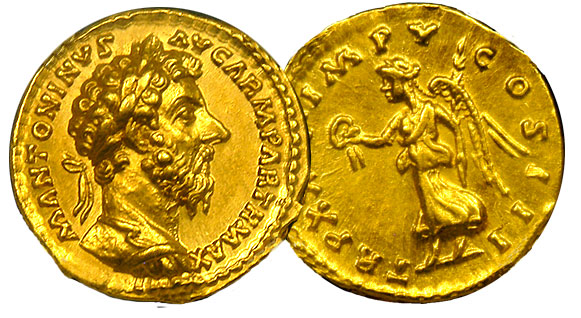
Gold was proved to be malleable, durable, and scarcer than anything else homo sapiens had found. Metal money is also censorship resistance. Although the Roman Empire minted gold coins, they acted as the central party verifying the weight of the coin. Global acceptance of gold provides liquidity when spending across borders. No government can single-handedly devalue your gold. It is a truly decentralized money that can be mined by anyone. There is no central point of failure and everyone has a fair chance of retrieving gold. Gold mining is a painstaking process that requires labor and time regardless of government or innovation. The fixed, estimated stock of gold gives no one the power to drastically change its value (Ludwig von Mises, 1912). These characteristics throned gold as the winner of fixed money and at a time the chosen medium of exchange for societies and cultures across the world. Overtime gold became entrenched in cultures and rituals. Demand increase with no drastic change in the supply schedule has led to gold slow but steady growth against the dollar.
It is the hunter gatherer within us that wants to collect and store the most valuable, hardest to get commodities. Humans hoard gold because of the broader economic marketability. Money is a free market. The market participants, being the people, converge on the best money, that being gold.
 Dhruv's Bubble